
A Love Letter to Ancient Landscapes, Geological Drama, and Nature's Extraordinary Patience
Prescott is the sort of place that makes you feel slightly underdressed for the scenery.
The pine-covered hills are lovely. The mountain air has a certain refreshing confidence. The historic downtown looks as though it understands the importance of a good first impression.
And then there are the rocks.
Not just ordinary rocks, mind you.
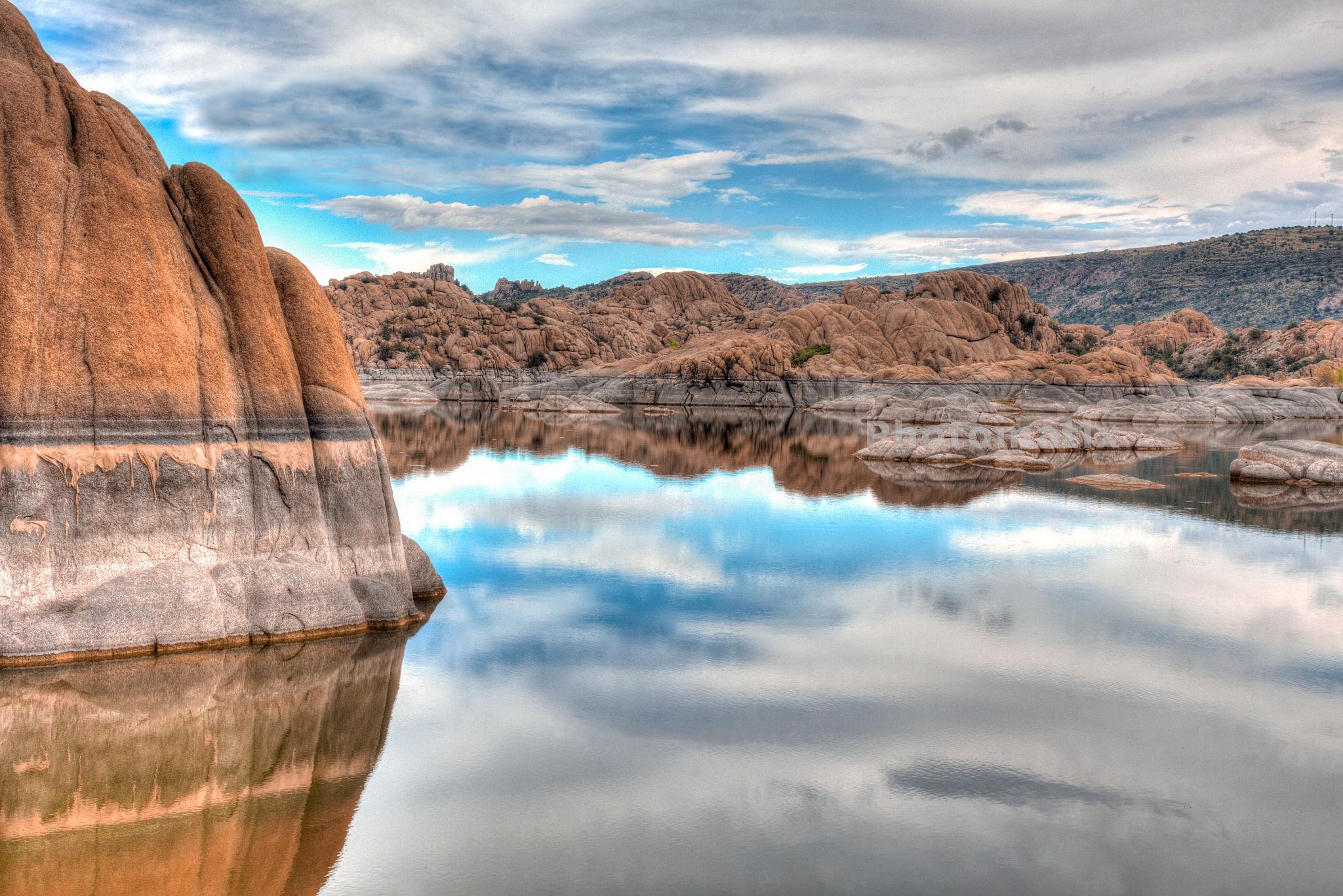
Enormous, dramatically rounded, wonderfully peculiar collections of granite that appear to have been arranged by a giant with an artistic temperament and absolutely no concern for traditional landscaping.
These are the Granite Dells.
And if you've ever admired them without knowing their extraordinary history, prepare to discover that Prescott has been keeping one of its most impressive stories directly in front of everyone.
Some of These Rocks Are Approximately 1.4 Billion Years Old
Let's begin with the number that puts everything else into perspective.
According to the Arizona Geological Survey, the granite exposed in Prescott's Granite Dells is approximately 1.4 billion years old.
Billion.
With a B.
That's considerably older than dinosaurs, flowering plants, the Grand Canyon in its present form, and practically every human invention—including the deeply suspicious technology behind automated customer-service menus.
When this granite originally formed, the world looked nothing like the landscape we recognize today.
The rock began as molten material deep within Earth's crust.
Over immense periods, it cooled and crystallized.
Later geological processes helped expose it at the surface, where weathering continued shaping its distinctive appearance.
The Granite Dells aren't simply large rocks.
They're visible pieces of Earth's astonishingly long history.
How Nature Learned to Round the Corners
One of the most striking features of the Granite Dells is the unusual shape of the boulders.
Some resemble enormous stacked cushions.
Others look like sculptures, walls, domes, or slightly unstable arrangements of gigantic potatoes.
The effect is so unusual that visitors might reasonably wonder whether somebody deliberately arranged them.
The explanation is geological.
A process called spheroidal weathering helps create their rounded forms.
Granite contains different minerals, and water can gradually alter some of those minerals through chemical reactions.
Weathering works along cracks and joints in the rock, often attacking corners and edges from multiple directions.
Over time, angular masses can become increasingly rounded.
Imagine the slowest sculptor in history.
Now imagine that sculptor has unlimited time, no deadline, and absolutely no interest in providing progress reports.
That's geology.
Watson Lake: Nature's Favorite Dramatic Backdrop
The Granite Dells are spectacular on their own.
But add the reflective waters of Watson Lake, and the landscape begins looking suspiciously like a painting.
The lake sits approximately four miles from downtown Prescott and offers an opportunity to experience the rock formations from a completely different perspective.
Depending on conditions and personal preference, visitors can explore the surrounding scenery through walking, hiking, kayaking, canoeing, or simply finding a comfortable place to admire the view.
The City of Prescott identifies the area as a destination for outdoor recreation, including boating, fishing, hiking, and wildlife observation.
And the surrounding Watson Woods Riparian Preserve provides habitat for a remarkable variety of bird species.
The combination is extraordinary.
Ancient rock formations rise around a comparatively modern recreational landscape, while plants and animals create an ever-changing foreground.
It's difficult to imagine a more effective collaboration between geology and scenery.
Why the Same Place Never Looks Quite the Same
One of the wonderful things about the Granite Dells is how dramatically their appearance changes with the light.
Morning can reveal delicate textures and long shadows.
Midday emphasizes the shapes and contours of individual formations.
Late afternoon may bring warmth and depth to surfaces that appeared almost entirely different hours earlier.
Clouds, reflections, and seasonal changes create additional variations.
The rocks themselves aren't particularly concerned.
After 1.4 billion years, they have developed a remarkable ability to remain unbothered.
But to visitors, the changing atmosphere makes the landscape feel new again and again.
This is one of the reasons natural places can remain fascinating long after the novelty of more elaborate attractions has worn off.
Their appeal doesn't rely on an elaborate production.
It comes from noticing something different each time.
The Unexpected Appeal of an Ancient Landscape
There is a particular satisfaction in spending time somewhere that makes ordinary concerns feel considerably smaller.
A difficult email, a crowded calendar, and the universal mystery of where all the matching socks disappear suddenly seem less important beside a rock that formed more than a billion years ago.
Landscapes like the Granite Dells encourage a different sense of time.
They remind us that meaningful changes aren't always immediate.
Some things develop over decades.
Others take centuries.
And occasionally, the result of a geological process extending across extraordinary periods is a spectacular place to spend an afternoon.
That contrast is part of Prescott's charm.
The city offers historic streets, recognizable traditions, surrounding forests, and dramatic natural formations within a relatively compact region.
Each contributes something different.
Together, they create a community with a distinctive relationship to its landscape.
The Beauty of Building Around What Already Exists
There's an architectural lesson hidden in all those remarkable rocks.
The strongest design often begins by understanding its surroundings.
In Prescott, that can mean considering topography, existing vegetation, drainage, views, and the character of the natural setting.
Rather than imposing an entirely unrelated design on a site, thoughtful planning can work with the environment.
A home may use windows to frame distant granite formations.
Outdoor spaces can take advantage of shade and seasonal light.
Landscaping can reflect the region's natural character.
Of course, beautiful scenery doesn't eliminate practical considerations.
Prescott properties may require careful evaluation of grading, access, water drainage, fire-wise landscaping, and maintenance needs.
The ideal property combines appreciation for the landscape with a clear understanding of what living there involves.
After all, a billion-year-old rock formation is fascinating.
Finding one in the wrong place when planning a driveway is a rather different experience.
A Landscape Worth Looking At Twice
Prescott's Granite Dells offer an increasingly rare kind of attraction.
They don't need to announce themselves with a billboard.
They aren't designed around the latest trend.
And they won't become obsolete when somebody invents a more fashionable version of a rock.
They've been here through unimaginable changes.
Their shapes tell stories of molten rock, shifting landscapes, and relentless weathering.
Their beauty comes from the combination of immense age and constant transformation.
And for anyone willing to look closely, they offer a remarkable reminder that the world is much stranger, older, and more beautiful than it first appears.
So the next time you're exploring Prescott, give the Granite Dells a little extra attention.
They've been working on their appearance for approximately 1.4 billion years.
The least we can do is appreciate the effort.
A Little More Prescott
Prescott's natural beauty, historic character, and distinctive landscapes are among the reasons so many people find the community memorable.
At Stratton Group, we enjoy helping people discover the places and details that make a community feel like home—including the extraordinary scenery that was here long before any neighborhood existed.


Check out this article next